Skip to main content Skip to footer

Why Believing in Your Potential Changes Everything:
You just made a money mistake overspent on a credit card, missed a savings goal, or watched an investment lose value. Your first instinct? Shame. Self-criticism. Maybe thoughts like “I’m just bad with money” or “I’ll never figure this out.”
Here’s what separates people who build wealth from people who stay stuck: it’s not how much they earn. It’s whether they believe they can improve.
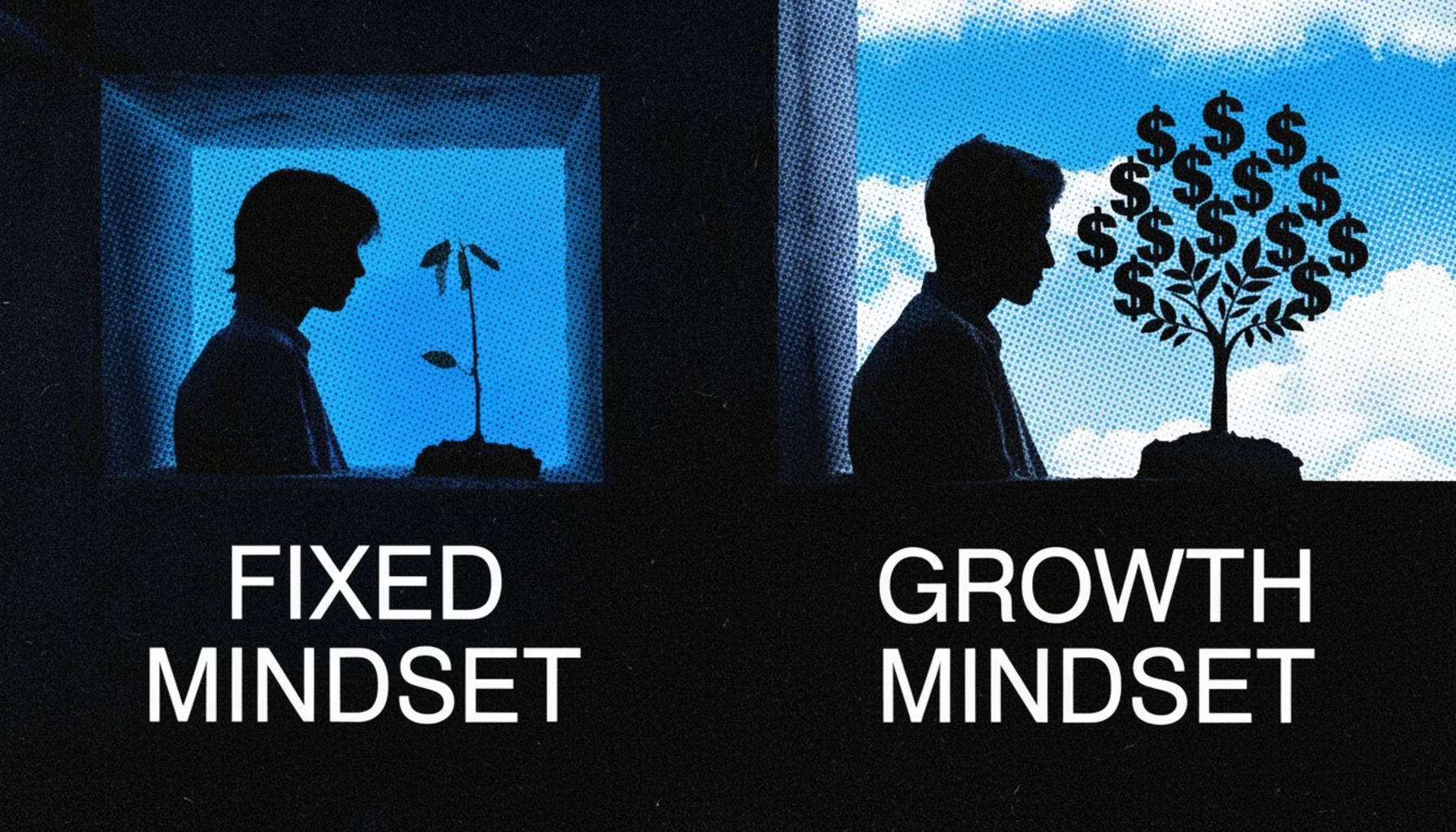
This is the difference between a fixed mindset and a growth mindset—and in your financial life, it’s everything.
Fixed Mindset vs. Growth Mindset: The Financial Split
A fixed mindset tells you that your financial abilities are static—you either have money skills or you don’t. If you made a mistake, it confirms what you already suspected: “I’m just bad with money.” When others succeed financially, you see it as proof of their inherent talent, not their effort. Failure feels permanent, so you avoid challenges, stick with what’s safe, and stop trying when things get hard.
A growth mindset, on the other hand, operates from a fundamentally different belief: your financial abilities can be developed through effort, learning, and strategy. When you make a mistake, you ask “What can I learn from this?” instead of “What does this say about me?”. You see other people’s financial wins as proof that it’s possible, not as evidence that you’re inadequate.
Research backs this up. A 2024 study found a statistically significant relationship between having a growth mindset toward finances and actual financial competence—with a path coefficient of 0.45. People with a growth mindset don’t just think differently; they achieve differently.
Why This Matters Right Now
The stakes for young adults have never been higher. Gen Z is carrying an average of $16,478 in debt, with 51% afraid money issues will prevent them from doing what they want in life. Millennials are juggling student loans, housing costs, and the lingering effects of financial instability from 2008. Gen X is playing catch-up with retirement planning.
In this environment, a fixed mindset is literally costing you money. When you believe you can’t improve, you:
- Avoid financial education because “I’m not smart about money”
- Skip investment opportunities because “I’m not an investor”
- Stop negotiating because “I’m not the type to ask for more”
- Abandon side hustles after setbacks because “I’m not cut out for this”
Each of these beliefs closes doors—and those closed doors cost real money over decades.
A growth mindset, by contrast, opens them.
How a Growth Mindset Changes Your Financial Decisions
With fixed mindset: “The market is going to tank next quarter. I’m 100% sure of it.”
With growth mindset: “Markets are complex with thousands of variables. I can’t predict what happens, but I can assign probabilities to different outcomes and adjust my strategy”.
See the difference? The fixed mindset investor paralyzed by certainty misses years of potential gains. The growth mindset investor stays in the game.
Research on investor behavior reveals that people with a growth mindset:
- Embrace humility. They know markets will make them look foolish sometimes, so they focus on their process, not their ego.
- Think in probabilities, not absolutes. They’re willing to be wrong, because being wrong teaches them something.
- View challenges as opportunities. When the market drops, they don’t panic—they study what went wrong and refine their approach.
- Seek constructive feedback. They actually want to know what they’re doing wrong, because that’s how they improve.
- Understand risk differently. They’re willing to take calculated risks because they believe their skills will improve, not because they’re reckless.
This shift in perspective literally changes behavior. Someone with a growth mindset is more likely to invest in skill development, negotiate for raises, start a side hustle, and persist through setbacks.
The Continuous Learning Lever
One of the clearest correlates of financial growth is continuous learning. People who treat professional development as an investment rather than a cost scale their income faster.
Consider this: A freelance designer in Chicago felt stuck charging hourly rates. She had a fixed mindset about what she could offer. Then she took online courses in UX design and expanded her service offerings. Within 18 months, her income increased by 40%, and she went from being a task-based vendor to a strategic partner for tech startups.

What changed? Not her starting point. Her belief that she could develop new skills and her commitment to actually developing them.
This pattern repeats across every field. Freelancers who continuously learn earn significantly higher incomes and have better client retention. Side hustlers who view each failure as a lesson compound their income growth. Workers who develop high-income skills create options their peers don’t have.
The growth mindset believes: I can learn. My effort matters. My skills are not fixed. And that belief cascades into action, which cascades into results.
The Compound Effect of Small Improvements
Here’s where growth mindset meets practical wealth-building: small, consistent improvements compound over decades into massive results.
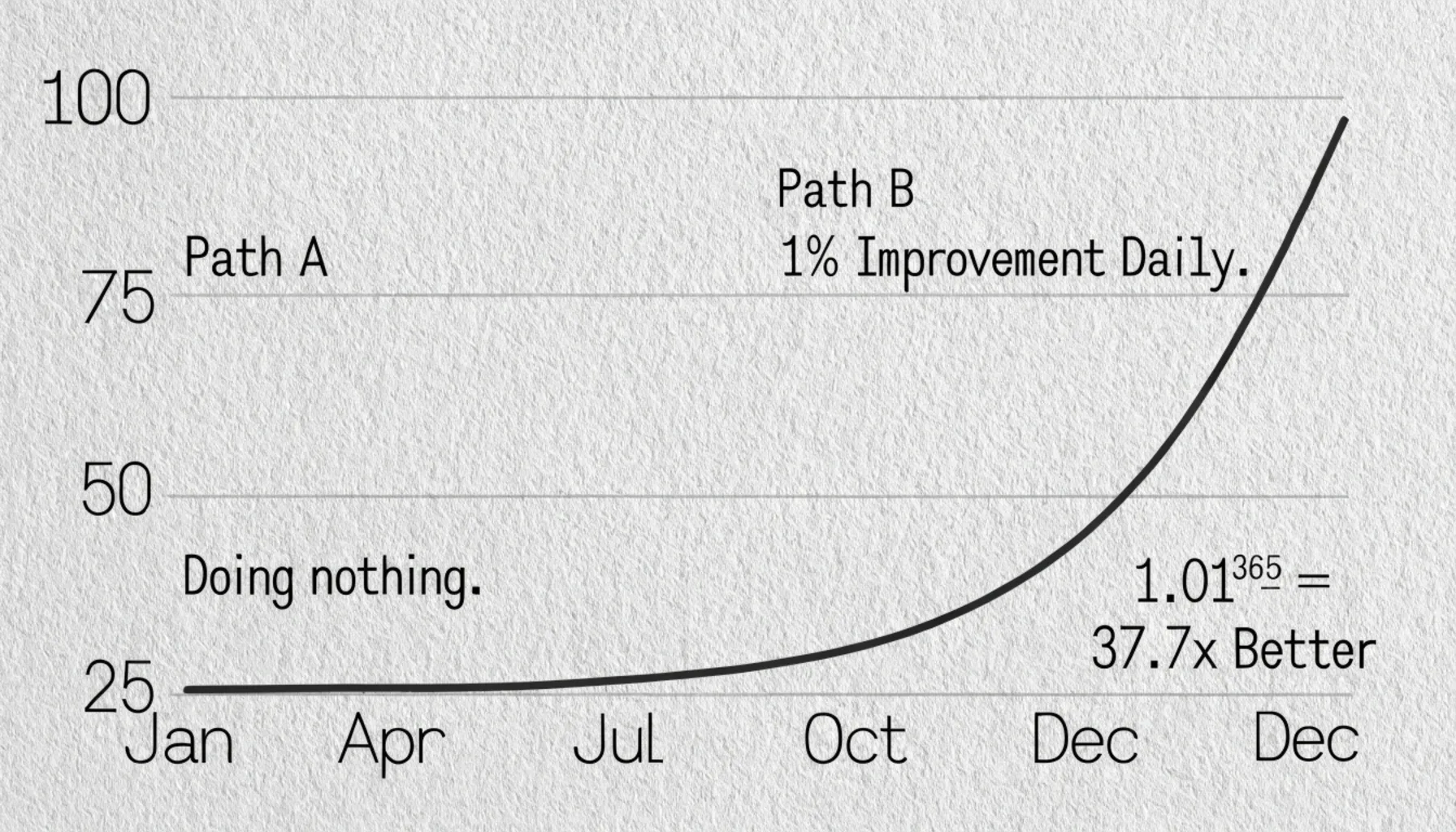
This isn’t just motivational—it’s mathematical. If you improve your finances by 1% each day, in one year you’ll be 37 times better than when you started. Not 37% better. 37 times better.
Starting small removes the perfection trap. With a fixed mindset, you might think “I can only invest if I can put away $500/month, so I won’t even start.” With a growth mindset, you think “I’ll start with $5 or $10, and improve from there”.
The compound effect works because:
- Tiny improvements are sustainable. You can’t maintain a radical budget overhaul, but you can maintain saving $5/week.
- Each small win builds momentum. Your brain releases dopamine when you accomplish something, which motivates you to keep going.
- Improvement begets improvement. Once you prove to yourself that you can save $5/week, increasing it to $10 becomes evidence-based, not aspirational.
A person who saves just $1 per day and invests it at a 10% annual return could have over $20,000 after 20 years. That’s not from a windfall or a lucky break. That’s from believing improvement is possible and then practicing it consistently.
Reframing Failure: The Hidden Advantage of Growth Mindset
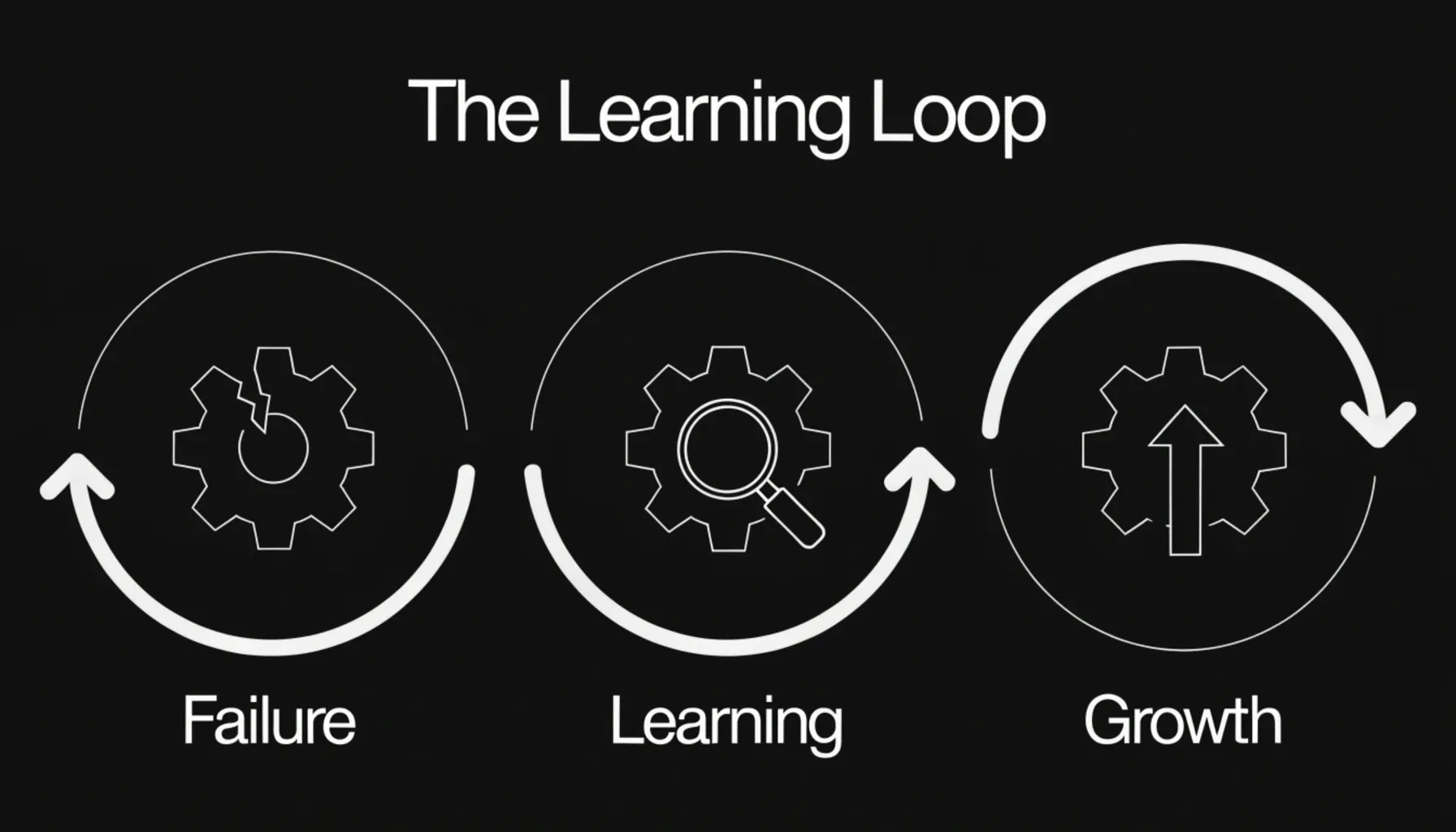
Here’s the hardest part of adopting a growth mindset, and also the most powerful: learning to see failure as information, not identity.
With a fixed mindset, failure means: “I’m not good at this. I should stop.”
With a growth mindset, failure means: “I tried one approach and it didn’t work. What can I learn?”.
Gen Z and Millennials have been particularly shaped by high-stakes achievement culture, so failure often feels catastrophic. One rejection feels like proof of inadequacy. One missed savings goal feels like evidence you can’t change. One side hustle that didn’t work out feels like proof you’re not entrepreneurial.
But research on resilience shows something different: people who view setbacks as learning opportunities recover faster and achieve more. They ask better questions. They adjust their approach. They try again with new information.
The irony? People with a growth mindset actually fail more often—because they try more things. They just don’t stay stuck in failure because they’re mining it for lessons.
Your One Thing Today
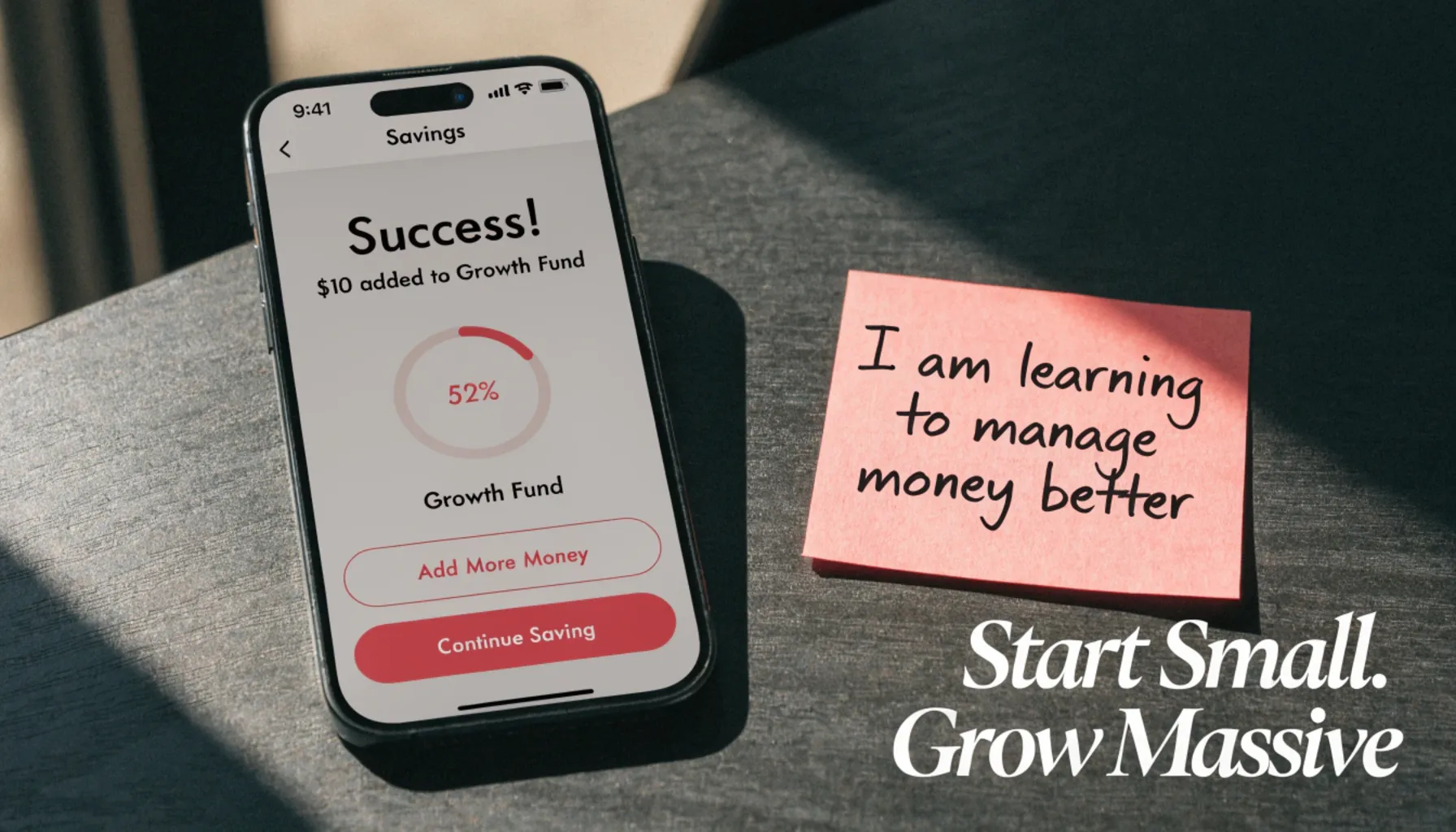
Pick one area where you’re operating from a fixed mindset—and replace it with a growth mindset statement:
Fixed: “I’m bad with money.”
Growth: “I’m learning to manage money better. I’m still in the early stages of that journey.”
Fixed: “I could never make money on the side.”
Growth: “I don’t know how to start a side hustle yet. Let me find one person who’s doing it and ask them how.”
Fixed: “I lost money in that investment. I’m not an investor.”
Growth: “I lost money because I didn’t understand that investment. Now I’m going to learn why before I invest again.”
Fixed: “I overspent. I’ll never stick to a budget.”
Growth: “I overspent in that category. Let me look at what triggered it and adjust my system.”
Each time you catch a fixed mindset thought and replace it with a growth mindset thought, you’re training your brain to see obstacles as opportunities instead of permanent limitations.
The Long Game: Why Growth Mindset Compounds
A growth mindset isn’t about positive thinking or toxic optimism. It’s about being realistic about where you are right now and realistic about your capacity to improve.
The research is clear: people with a growth mindset earn more over their lifetime, because they’re willing to:
- Learn new skills, even if it’s uncomfortable
- Take calculated risks on business or side ventures
- Negotiate for raises and better opportunities
- Persist when the first attempt fails
- Invest in their own development as non-negotiable
These aren’t genetic traits. They’re learned patterns. And if your current patterns were learned in an environment that told you “financial improvement isn’t possible,” you can learn new patterns that say “financial improvement is my responsibility, my opportunity, and my achievable goal.”
The Transformation Begins with Belief
Your financial future isn’t determined by your current income, your past mistakes, or the advantages you didn’t have growing up. It’s determined by whether you believe—actually, genuinely believe—that you can get better at this.
That belief opens the door to learning. Learning opens the door to better decisions. Better decisions compound. And over time, you look back and realize you’re not just earning more or saving more—you’ve fundamentally changed who you are with money.
The British cycling team didn’t have unprecedented talent. They had a philosophy: tiny improvements, obsessively pursued, compound into massive results. They applied it to bike design, training methods, and athlete nutrition—small tweaks, stacked together, that eventually won a 76-year losing streak.
Your financial growth works the same way. Not through one dramatic change, but through the consistent belief that improvement is possible, paired with small, compounding actions. That belief—that growth mindset—is where it starts. And where it starts is where it matters most.