Skip to main content Skip to footer


You check your bank account and your chest tightens. Even when there’s money sitting there, your first thought is: “What if it’s not enough?” You avoid looking at bills, skip the coffee with friends, and lie awake calculating worst-case scenarios. If this sounds familiar, you’re not dealing with a budget problem—you’re dealing with a scarcity mindset.
Here’s the truth that might surprise you: a scarcity mindset isn’t always about how much money you actually have. It’s about how your brain has learned to perceive and respond to resources. And right now, you’re far from alone in this struggle. Recent research shows that 71% of Gen Z, 68% of Millennials, and 69% of Gen X adults are experiencing financial anxiety at all-time highs. The good news? Your brain is capable of change, and shifting from scarcity to abundance thinking is a skill you can develop.
What Is a Scarcity Mindset?
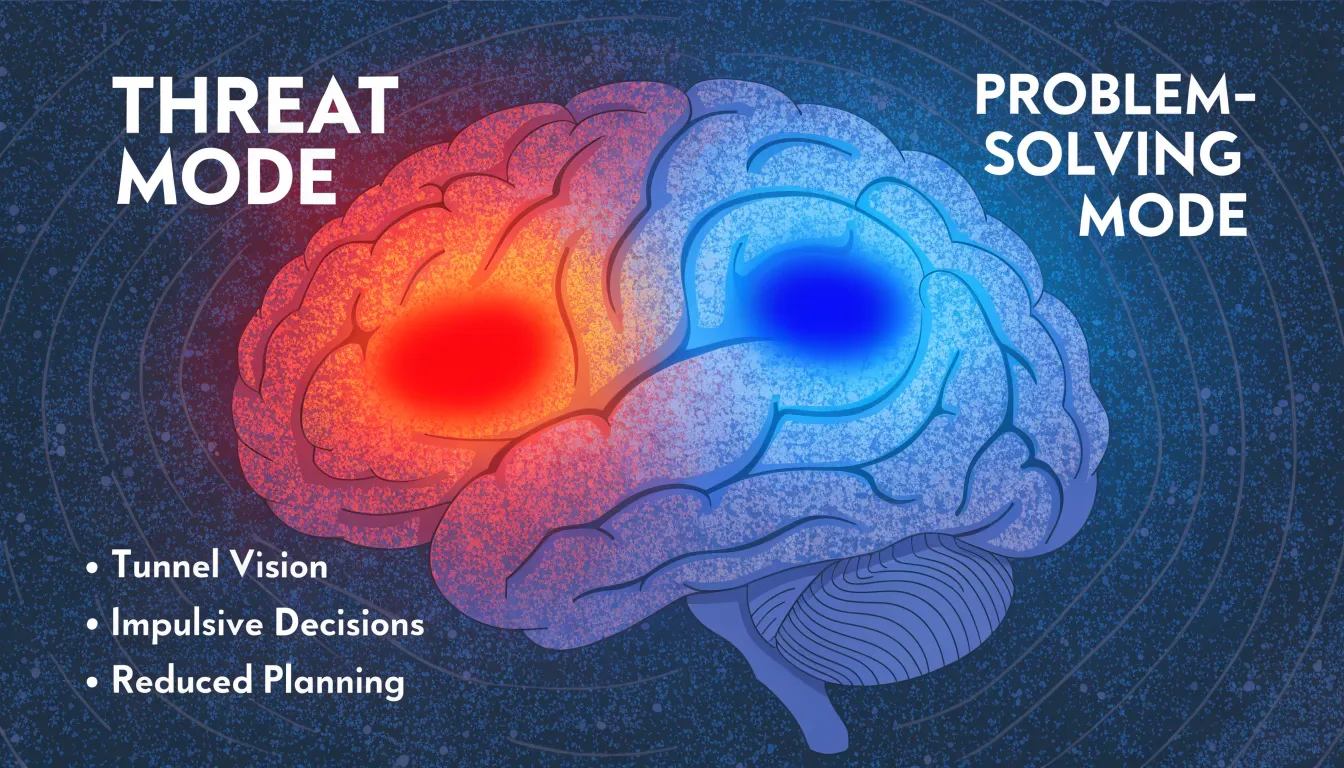
A scarcity mindset is a belief system rooted in the perception that there’s never enough—not enough money, not enough time, not enough opportunity. When you operate from scarcity, your brain treats every financial decision as a potential threat, triggering your amygdala (your brain’s alarm system) and flooding your body with stress hormones like cortisol.
Research from neuroscience studies reveals that a scarcity mindset fundamentally alters how your brain processes decisions. When resources feel scarce, your brain:
- Narrows your focus to immediate needs, creating tunnel vision that blocks you from seeing opportunities
- Increases impulsive decision-making driven by fear rather than strategy
- Reduces activity in the prefrontal cortex, the area responsible for long-term planning and creative problem-solving
This isn’t a character flaw or a sign that you’re “bad with money.” It’s your brain trying to protect you—but using outdated programming that often makes things worse.
The Real Cost of Scarcity Thinking

The psychological impact of financial scarcity extends far beyond your bank account. More than half of Canadians report experiencing negative life impacts from financial stress, with 38% citing anxiety, depression, and mental health issues as direct consequences. In the U.S., 76% of people feel alone in managing money-related worries, and 33% report that healthcare affordability has negatively impacted their mental health.
When you’re stuck in scarcity mode, you make decisions that feel protective in the moment but hurt you long-term. You might avoid investing because “what if I lose it all,” skip preventive healthcare to save money now, or turn down networking opportunities because you can’t afford the outfit or the parking. These aren’t rational calculations—they’re fear-based reactions shaped by a scarcity lens.
How to Recognize Scarcity Mindset in Your Daily Life
Scarcity thinking shows up in patterns you might not immediately recognize as mindset issues. Check in with yourself honestly:
- You automatically say “I can’t afford that” without checking your account or considering options
- You feel anxious or guilty every time you spend money, even on necessities
- You avoid looking at bank statements, bills, or your budget
- You believe financial success is a zero-sum game—someone else’s win means your loss
- You compare your financial situation to others and feel inadequate or resentful
- You focus on what you’re losing rather than what you could gain
These patterns aren’t permanent. They’re learned responses, and neuroplasticity—your brain’s ability to form new neural pathways—means you can rewire these thought patterns through conscious awareness and practice.
Shifting to an Abundance Mindset: Practical Strategies
An abundance mindset doesn’t mean pretending money problems don’t exist or engaging in toxic positivity. It means viewing money as a tool rather than a threat, approaching challenges as temporary rather than permanent, and making proactive decisions aligned with your values.
Reframe Your Money Language
The words you use shape your reality. Instead of saying “This is too expensive,” try “I’m choosing to spend my money on other priorities right now”. This subtle shift moves you from powerless (“I can’t”) to empowered (“I choose”). When you pay for something or give to charity, consciously think “There is more where that came from” instead of fearing future scarcity.
Practice Financial Gratitude
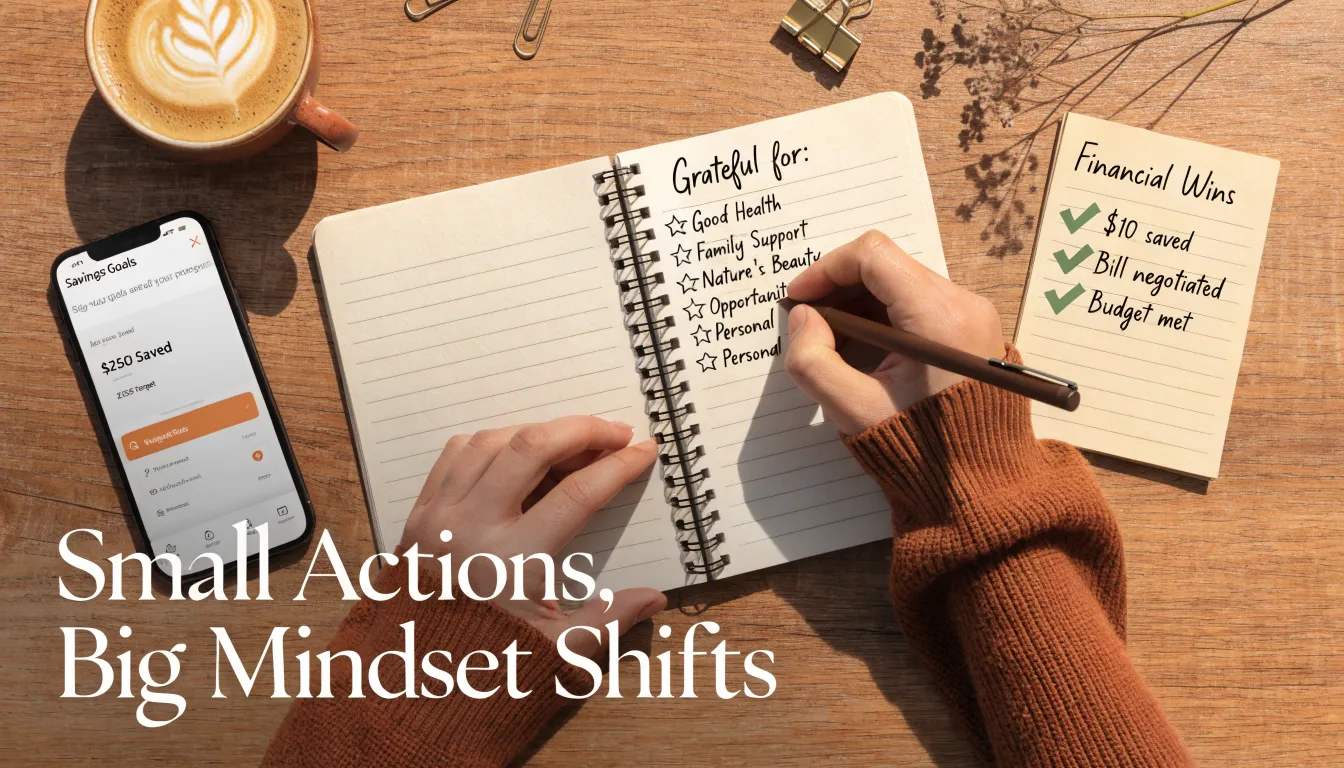
Start a daily practice of acknowledging what you do have. This isn’t about ignoring real financial challenges—it’s about training your brain to notice abundance alongside scarcity. Each morning or evening, write down three financial things you’re grateful for: a steady paycheck, a paid-off phone, access to clean water. Research shows that gratitude practices can reduce anxiety by restructuring neural pathways.
Build Evidence of Capability
Your brain needs proof that abundance is possible for you. Set micro-goals that feel achievable: save $10 this week, negotiate one bill, or complete one side-hustle task. Track these wins visibly. Each small success builds neural pathways that reinforce “I am capable” instead of “I’ll never have enough”.
Flip the Script with Strategic Questions
When scarcity thinking says “I can’t afford this,” challenge it by asking “How could I make this attainable by [specific date]?”. This shifts your brain from threat mode to problem-solving mode, activating your prefrontal cortex instead of your amygdala. You might realize you can’t—and that’s okay. But asking the question opens doors that “I can’t” automatically slams shut.
Automate Abundance Actions
Create systems that reinforce abundance thinking without requiring daily willpower. Set up automatic transfers to savings, even if it’s just $5 per paycheck. Automate retirement contributions up to your company match. These “set it and forget it” systems prove to your subconscious that you have enough to build with, not just survive on.
The Neuroscience of Change: Why This Works

Here’s the encouraging part: every time you practice abundance thinking, you’re literally rewiring your brain. Neuroscience research confirms that when you shift from scarcity to abundance mindset, your brain activates different regions—specifically, your prefrontal cortex takes over from your amygdala. This means:
- Enhanced creative problem-solving and innovation
- Improved strategic thinking and long-term planning
- Better emotional regulation and stress management
- Increased capacity for generosity and social connection
These changes don’t happen overnight, but they do happen. Studies on neuroplasticity show that consistent practice of new thought patterns creates lasting neural changes, similar to how meditation reduces anxiety over time.
Your One Thing Today
Pick one micro-action that feels “abundant” and build it into today. It could be:
- Moving $5 to a savings account labeled “Future Me Fund”
- Writing down three financial wins from the past month
- Replacing one “I can’t afford” statement with “How could I afford”
- Researching one side-hustle idea for 10 minutes
- Saying “thank you” when money comes in instead of immediately worrying about when it’ll leave
The goal isn’t perfection. It’s practice. Every time you choose an abundance-focused action—no matter how small—you’re building new neural pathways and proving to yourself that a different relationship with money is possible.
Moving Forward: From Scarcity to Security
Transforming your financial mindset isn’t about denying reality or adopting blind optimism. It’s about recognizing that your current thought patterns were formed under specific circumstances—and they can be updated as you grow. Scarcity thinking served a purpose once: it kept you alert to threats. But if you’re reading this, you’re ready for a different operating system.
Your brain is capable of remarkable change. With over 80% of adults worried about rising costs, financial anxiety is normal—but it doesn’t have to be permanent. By understanding the neuroscience behind scarcity mindset and implementing small, consistent practices to shift toward abundance thinking, you’re not just changing your thoughts. You’re changing your brain, your decisions, and ultimately, your financial future. Start with one action today. Then another tomorrow. That’s how transformation happens—not in dramatic overnight shifts, but in the compound effect of daily choices that say, “I am capable. There is enough. I can build from here